Most downsizers plan aging-in-place modifications backward.
They spend $20,000, $30,000, or even $40,000 modifying the large home they already own. Then, a year later, they decide they would rather move to a 55+ community with one-level living.
The renovation money walks out the door with the sale.
The better sequence is simple:
- Decide where you want to live.
- Compare your current home with specific 55+ communities and available floor plans.
- Modify the home you will actually keep.
A ranch-style home with a first-floor primary suite, main-floor laundry, a wide entry, and no-step garage access already includes many of the modifications people pay tens of thousands of dollars to add.
If you have already decided to stay in your current home permanently, modify it now. But do it in the right order.
Planning note: The prices below are typical planning ranges, not quotes. Costs vary by contractor, materials, permits, plumbing, wall structure, and local labor. This article is general information, not medical, financial, or legal advice.
Start With the Highest-Impact Safety Improvements
Bathrooms deserve first attention. They combine hard surfaces, water, tight spaces, and frequent transfers from sitting to standing.
Lighting also deserves special emphasis. A bright, well-lit path from the bedroom to the bathroom can be one of the least expensive and most useful safety improvements in the home.
Tier 1: Cheap, Immediate, and High Impact
These projects are worth considering almost regardless of whether you stay or move:
- Grab bars: Typically $100–$350 each installed. More may be required if the wall needs reinforcement.
- Lever handles: Replace round door knobs and faucet handles with levers. They are easier to operate with arthritis or reduced grip strength.
- Non-slip surfaces: Use a properly secured bath mat or non-slip shower surface. Avoid loose mats that slide.
- Better lighting: Add brighter bulbs, additional fixtures, illuminated switch plates, and motion-sensor night lights along the bedroom-to-bathroom path.
- Trip-hazard removal: Secure or remove sliding area rugs. Move cords out of walking paths. Rearrange furniture that crowds hallways.
- Stair visibility: Add brighter stair lighting and make sure the handrail is secure.
A basic Tier 1 package is often possible for less than $2,000. That is some of the highest-return safety spending available.
Important grab-bar warning: Do not rely on suction-cup grab bars as a primary support. Permanent grab bars should be installed into studs or proper wall blocking, not simply screwed into drywall. A grab bar that pulls out of the wall can be more dangerous than having no grab bar at all.

Tier 2: Moderate Cost, Noticeable Daily Improvement
Tier 2 projects improve comfort and independence without turning your home into a major construction site.
- Comfort-height toilet: Usually $300–$1,200 installed. It is a modest change that many homeowners notice every day.
- Handheld shower head: Helpful for seated or standing showers.
- Shower seat or bench: A practical option when standing for long periods is tiring.
- Improved stair railings: Consider stronger or better-positioned railings on both sides of an existing staircase.
- Adaptive furniture: A riser-recliner chair may help some homeowners. Test one before purchasing.
- Smart-home basics: Voice-controlled lights, automatic lighting, and a smart doorbell can add convenience and security. We cover those tools separately in our smart-home content.
- Stair lift: This may be appropriate if you are staying in a two-story home and cannot safely use the stairs.
The stair-lift decision deserves honesty. A stair lift can make a home usable now. However, future buyers may see it as a sign of declining mobility. Stair lifts are also frequently removed before listing, which creates another expense.
If you expect to sell within the next few years, ask whether a stair lift solves an immediate need or simply delays a larger housing decision.
For help comparing a two-story home with single-level options, contact The Swain Team at (215) 757-7257 or Info@BucksCountyBoomers.com.
Tier 3: Big Projects, and When They Are Worth It
Large modifications can be worthwhile when they address a real need. They are not automatically worthwhile just because a home is older.
Typical planning ranges include:
- Curbless or walk-in shower conversion: $3,000–$15,000.
- Full accessible bathroom remodel: $8,000–$25,000. High-end or structurally complex projects can exceed $45,000.
- Wider doorways: Costs vary significantly depending on whether walls are load-bearing.
- Threshold removal: Often manageable, but exterior doors and garage entries may require more extensive work.
- Main-floor laundry relocation: Pricing depends on plumbing, electrical work, ventilation, and the distance from existing hookups.
- Accessible entrance or ramp: Costs depend on elevation, length, materials, permits, and site conditions.
A curbless shower is often the most worthwhile larger project. Walking into a shower is safer than stepping over a tub wall, and a well-designed curbless shower can appeal to buyers of many ages.
The Best Cost-Avoidance Tip: Bundle the Work
If you are remodeling a bathroom, add proper wall blocking for future grab bars while the walls are open.
That small step can save expensive demolition later. It is one of the best opportunities to prepare for future needs without completing every modification today.
Use the 30% Test
If the modifications you need would cost more than roughly 30% of your home’s market value, pause before signing a contract.
Also pause if you are approaching a full-mobility retrofit commonly costing $40,000 or more.
Compare that renovation cost with:
- A ranch-style home.
- A 55+ community with single-level plans.
- A condo with elevator access.
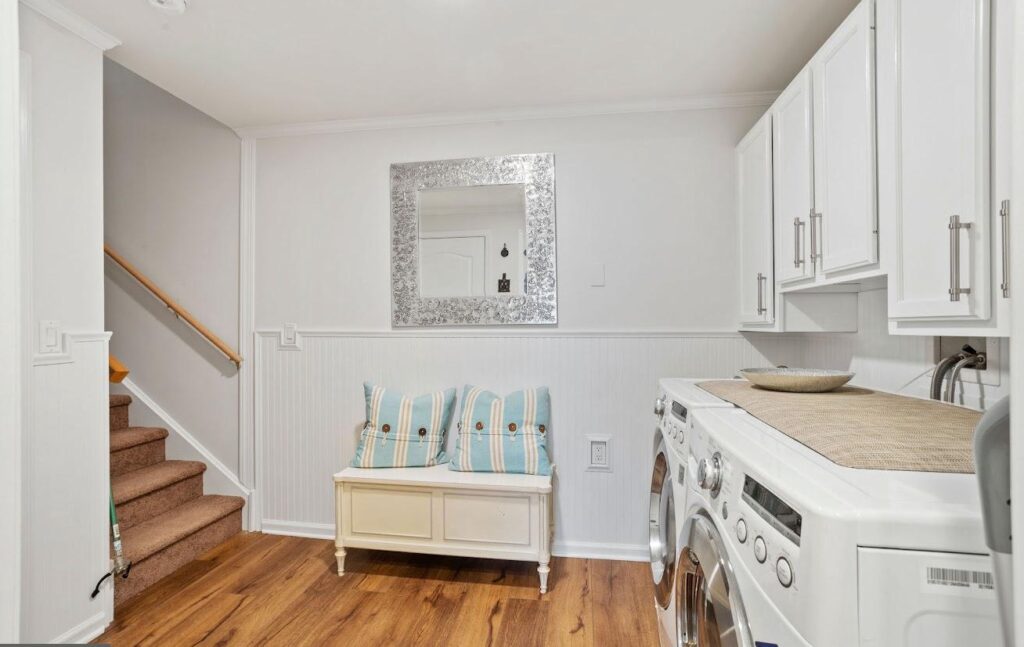
- A home with a first-floor primary suite and laundry.
- The cost of continued maintenance, taxes, and insurance on the current property.
If a project costs more than 1% of your home’s value and is expected to return less than 75% of its cost, we generally recommend considering a repair credit instead of completing the work before selling. You may be better off pricing the home honestly and allowing the buyer to choose the finishes and accessibility features that fit their needs.
What Helps Resale, and What Can Hurt It
Some aging-in-place improvements are also attractive universal-design upgrades. Others can make future buyers feel that the house is clinical or difficult to resell.
Usually helpful or value-neutral
These features often read as modern, comfortable, and premium:
- Curbless showers.
- Wider doorways.
- Lever handles.
- Excellent lighting.
- Main-floor living.
- Single-level floor plans.
- No-step garage or exterior entry.
- A clean, attractive bathroom with thoughtful safety features.
Potentially difficult for resale
These features may reduce the buyer pool or signal that the home requires specialized care:
- Walk-in tubs.
- Institutional-looking grab bars.
- Stair lifts.
- Medical rails.
- Large ramps.
- Visible medical equipment.
- Home elevators in some traditional neighborhoods.
The elevator point is context-dependent. In an ordinary single-family neighborhood, a home elevator may be a niche feature. In Woodhaven Hills, where homes have in-home elevators, an elevator can be a selling point because it is part of the community’s design.
The practical solution is to use attractive finishes. Choose decorative grab bars that coordinate with faucets and towel bars. Before listing, remove clinical-looking equipment when it is no longer needed. Keep the universal design. Remove the medical appearance.
Also, make sure every project is properly permitted and documented. Unpermitted work can create disclosure, insurance, appraisal, and financing problems later.
Possible Help With the Cost
Funding rules change, and eligibility is specific. Verify everything before ordering work.
- Medicare Advantage: Some plans offer limited home-safety benefits, but Original Medicare generally does not pay for standard grab bars or a full walk-in-shower remodel. Call your plan and ask about bathroom-safety assessments, approved devices, network contractors, and lifetime limits.
- VA benefits: Eligible Veterans with qualifying service-connected disabilities may qualify for Specially Adapted Housing or Special Home Adaptation grants. For fiscal year 2026, the VA lists maximum grants of up to $126,526 for SAH and $25,350 for SHA.
- Bucks County Area Agency on Aging: The Bucks County Area Agency on Aging can connect eligible residents with assessments, care coordination, and potential home-modification resources.
- Bucks County Home Repair Program: The Bucks County Home Repair Program may help qualifying owner-occupied households with health, safety, accessibility, and energy-efficiency repairs.
Ask about income limits, waiting lists, required assessments, cost sharing, contractor requirements, and whether assistance must be repaid when you sell.
What Is Already Built Into Bucks County 55+ Communities?
The right purchase can eliminate the need for a major renovation.
First-floor primary suites are common in communities such as:
- Legacy Oaks at Northampton, including the Cliveden, Astoria, and Brittany models.
- Yardley Woods.
- Fox Run Preserve.
- Bluestone Creek and The Enclave, which offer plans with first-floor owner’s suites and full basements.
Mid-rise elevator buildings at communities such as Village of Southampton, Forest Ridge, Hearthstone at West Bristol, and Centennial Station can make upper-floor living more accessible.
Avenrowe is another example of why timing matters. The Fairless Hills community has only 80 homes, built between 1999 and 2000, with no room for further development. Demand for single-story housing in the Bucks County 55+ market remains HIGH, so the right accessible resale home may not be available when you are ready. We wish we had more homes to offer when buyers are looking for a specific layout.
For Village of Southampton, do not stop at the elevator. Review:
- Reserve health.
- Fee increase history.
- Current and proposed special assessments.
- Elevator maintenance contracts.
- Elevator inspection and service history.
- The association’s budget and recent board minutes.
Even in a 55+ community, inspect the specific unit. Check:
- Door widths.
- Thresholds at exterior doors and garage entries.
- Step-in shower versus tub.
- Main-level laundry.
- Entry steps.
- Space for future grab bars.
- HOA rules for modifications.
The best modification is often choosing the right home in the first place.
We are more than willing to walk through these details with you before you buy. The Swain Team helps buyers compare 55 plus communities in Bucks County PA, 55 and over communities in Bucks County PA, retirement communities in Bucks County PA, and independent senior living options in Bucks County.
Call Christina Swain at (215) 757-7257 or email Info@BucksCountyBoomers.com. We can help you avoid renovating one house twice, and help you find a home that already fits the life you want next.