You do not need a big house to host Thanksgiving. You need a plan.
In some ways, a smaller home hosts BETTER. Nobody disappears into the formal living room. The conversations stay together. The cook is not isolated at one end of the house. And when Thanksgiving 2026 arrives on Thursday, November 26, your roughly 1,800-square-foot home can feel full, welcoming, and completely capable.
Many homeowners who are considering a move into one of the 55 plus communities in Bucks County PA quietly worry about this. They have hosted for decades in a much larger family home. They are wondering:
- Where will everyone sit?
- Where will the food go?
- What happens with overnight guests?
- Can one oven really handle Thanksgiving?
- Will the grandchildren have anywhere to sleep?
The answer is yes, with a little advance planning.
1. Start With the Seating Math
Most hosting stress begins when people are invited before anyone measures the table.
A useful working rule is 24 linear inches of table edge per person.
As a starting point:
- A 6-foot table seats approximately 6 people comfortably along the long sides.
- An 8-foot table seats approximately 8 people.
- Using the table ends can add another 1–2 people.
- Measure your actual table before promising a headcount.
If you are short on table space, you have options:
- Push a folding table against the dining table.
- Use a card table for teenagers.
- Set up a low table for children.
- Add counter stools at the kitchen island.
- Use benches or ottomans where appropriate.
- Mix chairs. Nobody remembers whether the chairs matched.
You also do not have to put everyone at one long table. Create several seating zones:
- Dining table for adults.
- Kitchen island for casual seating.
- Coffee table and floor cushions for children.
- Card table for teenagers or a smaller group.
Spreading people out makes the home feel larger, not smaller. And children often prefer having their own table. That is not a compromise. It is a feature.
2. Buffet Wins in a Smaller Home
We are going to be direct: buffet-style Thanksgiving is the better choice for a smaller home.
Plated service sounds elegant until serving dishes, platters, gravy boats, wine glasses, and your good china are all competing for the same six feet of table.
Instead, create food stations wherever you have horizontal space:
- Kitchen counters.
- The island.
- A sideboard.
- A cleared dresser.
- A folding table.
- A console table in another room.
Keep the dining table for plates, glasses, napkins, and people.
Use vertical space to gain more serving room:
- Place dishes on cake stands.
- Use sturdy risers.
- Stack books under a covered platter.
- Put smaller bowls in front of larger dishes.
If the table is especially tight, plate the food in the kitchen and carry out the finished plates. This eliminates serving dishes from the table entirely.
Also, put the drinks somewhere else. A card table in the hallway, mudroom, or covered porch can keep guests from crowding the kitchen. The kitchen is usually the real bottleneck, not the dining room.
Create a one-directional buffet line. Start at the far end of the kitchen so guests move forward instead of doubling back into the cook.

3. Make One Oven Work Harder
The Thanksgiving problem is simple: one oven, one turkey, and four side dishes that all want to cook at 350 degrees.
The solution is not panic. It is a written timeline.
Strategies that actually work
- Roast the turkey first and let it rest while casseroles and rolls use the oven.
- Prepare cranberry sauce, desserts, gravy base, and cold sides the day before.
- Hold mashed potatoes in a slow cooker.
- Use a countertop roaster for the turkey or a side dish.
- Use a slow cooker for stuffing, sweet potatoes, or another casserole.
- Reheat smaller portions in the microwave without apologizing.
- Use the stovetop for green beans, gravy, vegetables, and potatoes.
The easiest answer may be a potluck. Assign specific items by name:
- “Mary, please bring the green beans.”
- “John, you are in charge of rolls.”
- “The grandchildren are bringing dessert.”
- “We need one person for drinks.”
Most family members genuinely want to help. Giving them a specific assignment makes it easy.
It also helps with cost. One recent 2026 estimate put a traditional Thanksgiving dinner for 10 at roughly $80–$100, while broader holiday food-and-drink surveys show that hosting costs can climb considerably depending on the menu and beverages. About half of Americans report that rising grocery costs make holiday hosting stressful. Sharing the load is both practical and financially sensible.
And one important safety reminder: if anyone is deep-frying a turkey, keep the fryer outdoors and well away from the home, deck railings, siding, trees, and anything flammable. Never leave hot oil unattended.
4. Plan Overnight Guests Honestly
A typical 1,800-square-foot home may offer:
- One guest bedroom.
- One convertible space, such as a den, loft, or pull-out sofa.
- A living room that can work for a child or grandchild in a pinch.
That is two realistic sleeping areas for many households. Plan the assignments before Thanksgiving week.
Comfort matters more than elaborate furniture:
- Put a real mattress topper on an air mattress.
- Provide actual sheets, blankets, and pillows.
- Clear a surface for guests’ belongings.
- Add a luggage stand, bench, or small table.
- Place a basket of towels in each sleeping area.
- Provide a mirror and access to an outlet.
The bathroom may be the true pinch point. One bathroom and five overnight guests requires a little coordination. Set a loose morning order, especially if people need to leave early.
And here is the permission slip many hosts need: some family members can stay at a nearby hotel.
That is not a failure. It may give them a better bed, more privacy, and a quieter morning. Many guests actually prefer having their own space.
This is also where certain 55+ floor plans shine. In our Ivygreene floor-plan guide, we discuss how some two-story layouts provide a genuine upstairs guest bedroom or loft. The main level can remain comfortable for the homeowners, while grandchildren sleep somewhere real instead of on the living room floor.
Ivygreene homes range from approximately 1,740 to 1,950 square feet and include several floor plans designed around practical daily living and visiting family.
5. Use the 55+ Clubhouse Card
This is one of the most underused advantages of living in a 55+ community.
Many communities allow residents to reserve a clubhouse, ballroom, meeting room, or catering kitchen for private family gatherings. For a large Thanksgiving, that can solve nearly the entire space problem:
- More seating.
- Tables and chairs already available.
- A kitchen designed for serving.
- Better traffic flow.
- No parade of guests walking through your home with plates.
- Room for older relatives and children to spread out.
Ivygreene, a 55+ townhouse community in Warminster, includes a clubhouse with a catering kitchen, game room, meeting room, billiard room, and other amenities. The community has approximately 158 homes and floor plans ranging from 1,740 to 1,950 square feet.
Before planning Thanksgiving at any clubhouse, ask the HOA or management:
- Are private family gatherings permitted?
- Is there a reservation fee or cleaning deposit?
- How far in advance can you book?
- Does Thanksgiving week fill quickly?
- Can you use an outside caterer?
- Are there kitchen-use or cleanup requirements?
- What are the alcohol rules?
- Is guest parking adequate?
- Is there a limit on non-resident guests?
- Are there quiet hours or cleanup deadlines?
HOA rules and fees vary by community. Some clubhouses are available only for community events. Ask now, not November 20.

6. Check the 55+ Details Before You Invite Everyone
The lifestyle in retirement communities in Bucks County PA can make hosting easier, but every community has its own documents and rules.
Check:
- Overnight guest limits.
- Maximum consecutive nights for non-residents.
- Guest parking restrictions.
- Clubhouse reservation rules.
- Noise and quiet-hour requirements.
- Pet rules if family members are bringing animals.
- Whether outdoor heaters or fire pits are allowed.
If you live in a twin or quad-style home, remember that a full house carries. Be considerate of shared walls:
- Ask guests to remove shoes.
- Put a rug under the children’s table.
- Keep music at a reasonable level.
- Give neighbors a friendly heads-up.
Coats and shoes can also overwhelm a small entryway quickly. Use:
- Wall hooks.
- A rolling garment rack.
- A boot tray.
- A bench.
- One designated closet.
Clear clutter weeks in advance. Downsized homes are efficient, which means there may not be a spare corner for chaos. Moving a few items into a garage, basement, or closet before Thanksgiving buys you meaningful space.
7. Treat the Patio as a Second Room
If the weather cooperates, your patio or deck becomes an extra room.
Set up:
- Appetizers.
- A drink station.
- Outdoor-safe lighting.
- Blankets in a basket.
- A few sturdy chairs.
Appetizers outside are one of the highest-leverage hosting moves you can make. They pull guests out of the kitchen during the exact hour when the cook is busiest.
Bucks County weather in late November is a coin flip, so have a backup plan:
- Fire pit, if permitted.
- Outdoor heater, if allowed.
- Covered porch.
- Blankets.
- A clear path for moving everything indoors.
Do not depend on good weather. Be delighted if it arrives.
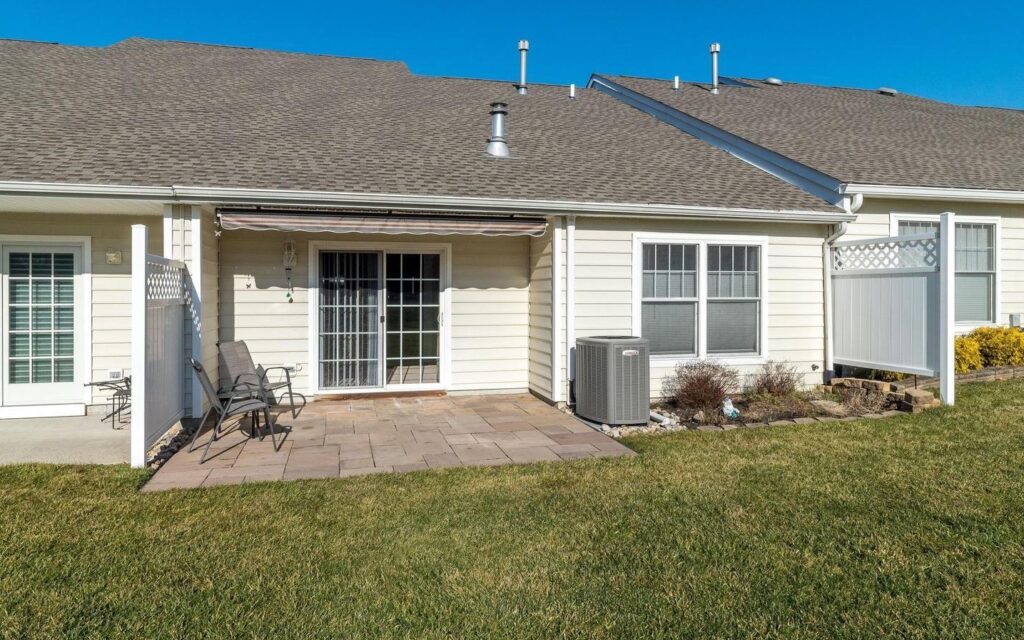
A Smaller Home Can Still Hold Big Traditions
If you are thinking about moving, do not remodel your current home just to prove that you can host one more holiday.
As a general rule, we recommend carefully reconsidering improvement projects that cost more than 1% of the home’s value but are expected to return less than 75% of the project cost. In that situation, a repair credit may make more sense than taking on a major project, especially if your long-term plan is to sell.
When comparing 55 and over communities in Bucks County PA, look beyond the square footage. Ask:
- Does the floor plan have a real guest room?
- Is there a loft or flexible den?
- Is the kitchen open enough for conversation?
- Is there a patio?
- Can the clubhouse accommodate family gatherings?
- Are guests allowed to stay overnight?
- Is the community easy for family to reach?
Avenrowe is another example of why availability matters in this market. The community has a limited supply of just 80 homes built between 1999 and 2000, with no room for further development. Demand remains high for single-story housing in the Bucks County 55+ market, so we wish we had more options when buyers ask for a home with both comfortable daily living and room for family visits.
The right home does not need to be enormous. It needs to support the way you actually live.
This Thanksgiving may be your first holiday in a new home. Let it feel like a beginning, not a compromise.
The Swain Team helps buyers compare floor plans, clubhouses, guest policies, and the practical details that matter in senior living in Bucks County. We are more than willing to talk through which homes genuinely handle a crowd.
Call us at 215-757-7257 or email TheSwainTeam@gmail.com.
You can also reach us at Info@BucksCountyBoomers.com. If you are considering Ivygreene, Avenrowe, or another 55+ community, contact us early. Inventory is limited, and waiting until the perfect home appears can mean waiting longer than you hoped.
Ready to find a home that hosts well?
- Phone: 215-757-7257
- Email: TheSwainTeam@gmail.com
- Website: BucksCountyBoomers.com
- Explore 55+ communities: Bucks County 55+ communities
We would love to help you find a home where the whole family can still gather around the table, even if the table has a few extra leaves.