A 55+ active adult community and a Continuing Care Retirement Community, or CCRC, are NOT the same thing.
A 55+ community is primarily a home and a lifestyle. You purchase a home, live independently, and enjoy low-maintenance living with neighbors in a similar stage of life.
A CCRC, also called a Life Plan Community, is a home AND a care plan. It combines independent living with assisted living, memory care, and skilled nursing services, usually on one campus.
According to Harvard Health Publishing, CCRC entrance fees can range from approximately $100,000 to $1 million, with monthly charges averaging about $3,000 to $5,000. Depending on the community, residence, contract, and care level, costs can be higher.
That is a BIG financial difference. The right choice depends on your health, finances, family situation, and how much future care planning you want to handle now.
The Big Picture: Two Very Different Products
55+ Active Adult Communities
A 55+ active adult community is a residential neighborhood designed for independent adults. You generally purchase a home, condominium, townhouse, carriage home, or villa.
You are still responsible for your own:
- Healthcare decisions
- Meals and groceries
- Utilities and insurance
- Interior home maintenance
- Home care, if you need it later
- Arranging assisted living or skilled nursing if your needs change
The community may provide:
- Clubhouse amenities
- Fitness centers
- Pools
- Pickleball or tennis courts
- Walking paths
- Social clubs and activities
- Exterior maintenance
- Landscaping and snow removal
The goal is simple: make your home easier to manage and your social life more active.
You can explore local options through our guide to 55+ communities in Bucks County, PA.
Continuing Care Retirement Communities
A CCRC provides several levels of housing and care in one larger campus. You may begin in an independent living apartment or cottage. If your needs change, you may have access to:
- Assisted living
- Personal care
- Memory care
- Skilled nursing
- Rehabilitation services
- Wellness programs
- Dining and housekeeping services
The goal is to reduce the need for another major move if your health changes.
However, “access to care” does not always mean all care is included at no additional cost. Contract types vary. Some CCRCs offer more predictable future-care pricing. Others use a fee-for-service model, where assisted living or skilled nursing costs are added when you need them.
That contract matters enormously.
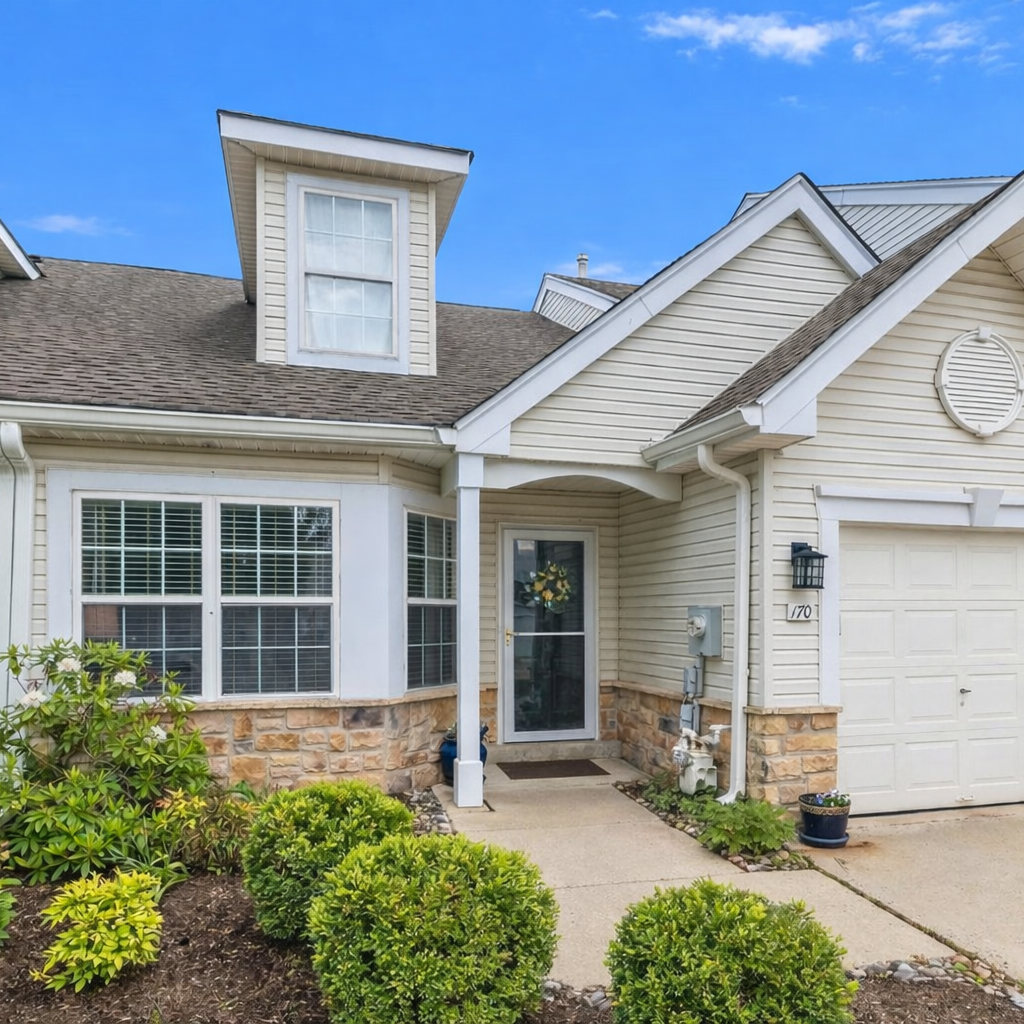
CCRC vs. 55+ Community: Side-by-Side Comparison
| Feature | 55+ Active Adult Community | CCRC or Life Plan Community |
|---|---|---|
| Ownership | You typically own your home as a condominium, townhouse, or fee-simple property. | You usually receive a right to occupy a residence under a contract rather than owning the real estate. |
| Upfront cost | Down payment, closing costs, and possible renovations. | Often a significant entrance fee, commonly ranging from the low six figures to $1 million or more. |
| Monthly cost | HOA or condominium fees may commonly fall in the $150-$500 range, plus mortgage, taxes, utilities, insurance, and services. | Monthly service fees often run several thousand dollars, commonly $3,000-$8,000 or more depending on the contract and occupancy. |
| Healthcare | No built-in healthcare continuum. You arrange doctors, home care, assisted living, or nursing care separately. | Independent living, assisted living, memory care, and skilled nursing may be available on the campus. |
| Meals | You generally prepare your own meals or dine out. | Meal plans and dining services are often included or available as part of the monthly package. |
| Maintenance | Exterior maintenance may be included, but you still manage the home’s interior. | Maintenance, housekeeping, transportation, and other services are often included in the monthly fee. |
| Resale and equity | Your property can appreciate, be sold, refinanced, or passed to heirs. | Entrance fees may be partially refundable, but you generally do not build traditional real estate equity. |
| Best fit | Healthy, independent adults who want community and less maintenance. | People who want a structured plan for changing care needs and are comfortable with a larger financial commitment. |
These figures are planning ranges, not quotes. We recommend requesting current fee sheets, HOA budgets, and sample contracts before making a decision.
How Do CCRC Entrance Fees Work?
CCRCs usually involve two primary charges:
- An entrance fee
- A recurring monthly service fee
The entrance fee may be:
- Nonrefundable
- Partially refundable
- Refundable at a specific percentage, such as 50%, 75%, or 90%
- Refundable only under certain circumstances
- Returned to your estate after the residence is reoccupied or resold
Do not assume that “refundable” means you receive the entire amount back quickly. Ask:
- What percentage is refundable?
- Is the refund guaranteed?
- When is it paid?
- Does repayment depend on resale?
- What happens if you move to another level of care?
- Can monthly fees increase?
- What happens if the community experiences financial trouble?
- What does the contract say about your estate?
Pennsylvania’s Department of Insurance provides consumer information about continuing care retirement communities. It is also wise to have an elder-law attorney and financial professional review the agreement.
Which Option Do You Actually Need?
There is no universal answer. Start with these practical questions.
1. Are you healthy and independent today?
If you are active, drive, cook, manage your medications, and handle daily tasks, a 55+ community may provide everything you need right now.
You can downsize, eliminate much of the yardwork, make new friends, and enjoy amenities without paying for a full continuum of care.
If you already need regular help with bathing, dressing, medication management, or mobility, you should speak with a healthcare professional before choosing an independent 55+ home.
2. Do you want to preserve home equity?
A 55+ community usually wins in this category.
When you purchase a home in a Bucks County 55+ community, the property is generally yours. You may build equity and retain the ability to sell or leave the property to your heirs.
A CCRC entrance fee may offer a partial refund, but that is not the same as owning a home that can appreciate in value. You are paying for housing, services, and future-care access rather than traditional real estate ownership.
3. Do you want future care arranged now?
A CCRC may be appealing if your highest priority is knowing where you will go if you need additional support.
This can be especially important if:
- You live alone
- Your children live out of state
- You have a progressive health condition
- You do not want to manage a future move during a crisis
- You want your spouse to remain nearby if your care needs differ
A CCRC can provide reassurance. But you are paying for that reassurance upfront and every month.
4. What does your complete budget look like?
Compare the full cost of both paths.
For a 55+ community, include:
- Purchase price
- Mortgage or cash investment
- HOA or condominium fee
- Property taxes
- Homeowners insurance
- Utilities
- Home repairs
- Housekeeping
- Transportation
- Potential home care
- Future assisted living or nursing care
For a CCRC, include:
- Entrance fee
- Monthly service fee
- Contract type
- Annual fee increases
- Additional care costs
- Dining charges
- Transportation fees
- Refund provisions
- Costs for a second resident
A 55+ home may look less expensive at the beginning, but future home care can become a significant expense. A CCRC may cost more upfront, but some contracts offer more predictable access to care. You need to compare the numbers based on your specific situation.
5. Where do you want to live?
Ask yourself honestly:
- Do you want your own kitchen and living room?
- Do you want to keep your furniture and belongings?
- Do you enjoy maintaining some control over your home?
- Would you prefer meals, housekeeping, and activities organized for you?
- Do you want a neighborhood setting or a campus setting?
Neither answer is wrong. They are simply different lifestyles.

The Bucks County, PA Perspective
Bucks County has a wide range of 55 and over communities in Bucks County, PA, including communities with condos, townhomes, carriage homes, villas, and single-family homes.
Examples include:
- Renaissance at Morgan Creek in the Quakertown area
- Regency at Hilltown near Perkasie
- Heritage Creek Estates in Warwick
- Village of Doylestown
- Villas at Riverview in Bristol
These are active adult housing options. They are not substitutes for assisted living or skilled nursing.
Continuing care options also exist throughout the greater Bucks County and Philadelphia region. Examples include Pennswood Village in Newtown, Ann’s Choice in Warminster, and Phoebe Richland in Richlandtown. Pennswood Village describes its offerings as including independent living, healthcare, fitness, dining, and wellness services.
Availability and contract terms change. Some communities may have a waiting list, while a 55+ resale may appear and sell quickly. We wish we had more homes available whenever demand rises, so timing matters.
Many Bucks County seniors choose a 55+ community first because they are healthy and active. They plan for future care separately through home care, long-term care insurance, family support, or a later move if necessary.
Others decide that the CCRC model is worth the entrance fee because they want their care plan established NOW.
The Simple Framework to Remember
- 55+ community = a home and a lifestyle.
- CCRC = a home and a care plan.
Choose a 55+ community if you value:
- Homeownership
- Real estate equity
- Independent living
- Lower monthly fees
- More control over your daily life
- A neighborhood environment
Consider a CCRC if you value:
- A continuum of care
- On-campus healthcare access
- Structured services
- Less responsibility for meals and maintenance
- A plan for changing needs
- Additional support for you or your spouse
The best time to compare your options is before you are under pressure. Waiting until a health crisis may leave you with fewer choices, less time, and a possible waiting list.
We Can Help You Compare Your Options
The Swain Team specializes in Bucks County 55+ active adult communities. We can help you compare neighborhoods, review homeownership costs, understand HOA documents, and determine whether a 55+ home fits your broader retirement plan.
We are more than willing to help you think through the questions a real estate agent can answer: and point you toward appropriate healthcare, legal, or financial professionals for the questions we cannot.
Start with our complete Bucks County 55+ community directory.
For personalized guidance, contact us:
- Christina Swain, Realtor in Red
- Office: (215) 757-7257
- Email: Christina@RealtorInRed.com
Call or email Christina@RealtorInRed.com before you tour. We can help you decide whether a Bucks County 55+ community, a CCRC, or another senior living option makes the most sense for your next chapter.