The first 90 days in a 55+ community are about adjustment, not perfection. You are learning a new home, a new neighborhood, new HOA rules, and a new rhythm.
Guidance from senior-living organizations commonly places the adjustment period at 30 to 90 days. That is normal. You may feel excited one day and overwhelmed the next. The residents who settle in most successfully do two things:
- They bring the things that make everyday life feel familiar.
- They show up early enough to build new routines and relationships.
We have collected the lessons residents share most often after moving into 55 plus communities in Bucks County PA. Consider this your practical first-90-days guide.
What to Bring: The Things That Make Your New Home Feel Like Yours
“Bring your favorites. Do not donate your whole life.”
One of the most common mistakes is getting so focused on “starting fresh” that you give away the items you use every day.
Bring:
- Your favorite coffee maker
- Comfortable chairs
- Everyday dishes and cookware
- Your best bedding and towels
- The lamp you read beside every evening
- Photos and artwork that make the space feel familiar
- Clothing you actually wear
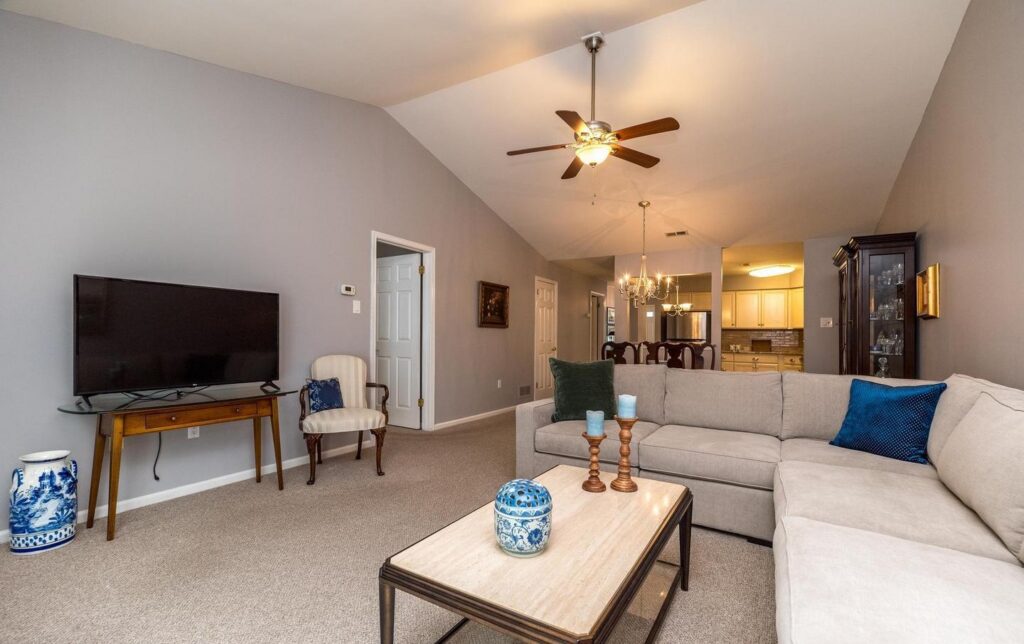
A smaller home does not mean you have to make it feel generic. Your new home should reflect you, not a staged model.
Residents often say they regretted getting rid of useful, familiar items simply because they wanted a clean slate. You can create a fresh start without throwing away the things that make daily life comfortable.
“Pack a real toolbox: and get a handyman’s number.”
Even low-maintenance living still involves small repairs and adjustments.
Bring a basic toolbox with:
- Screwdrivers
- Pliers
- A hammer
- Measuring tape
- Picture-hanging supplies
- Batteries
- A flashlight
- Basic hardware
Then ask your new neighbors or property manager for the name of a reliable local handyman. You may need help sooner than you expect with hanging artwork, adjusting a door, installing grab bars, or putting together furniture.
This is one of the advantages of moving into an established community. Your neighbors have already hired the plumber, electrician, handyman, and appliance repair company. Ask.
“Transfer your medical records and prescriptions before you need them.”
Do not wait until you are out of medication or trying to schedule an appointment.
Before or shortly after moving:
- Transfer prescriptions to a convenient local pharmacy.
- Confirm which doctors are accepting new patients.
- Request copies of important medical records.
- Update your emergency contact information.
- Find the nearest urgent care and hospital.
- Add new providers to your phone.
- Give your new address to your medical offices and insurance companies.
This is especially important when moving across town: or from another state. A pharmacy near your new home may be more convenient than the one you used for years.
Your new neighbors can also be a helpful source of local information. They may know which pharmacies deliver, which doctors are accepting patients, and which medical offices are easiest to reach from the community.
“Bring the hobbies you actually enjoy.”
If you play golf every month, bring the clubs. If you fish regularly, bring the rods. If you paint every week, bring the supplies.
Bring the equipment connected to hobbies you genuinely practice:
- Golf clubs
- Fishing gear
- Sewing or quilting supplies
- Art and painting materials
- Exercise equipment you use
- Gardening containers for a patio or porch
- Musical instruments
- Books you return to often
But be honest about the word actually.
If you have not painted in five years, do not move six boxes of unused art supplies into a smaller home because you might become a painter someday. Bring a starter amount. If the hobby returns, you can add to your collection later.
What to Leave: The Things That Follow You but Do Not Serve You
“The someday boxes are still going to be someday boxes.”
You know the boxes:
- “Maybe I’ll need this.”
- “Holiday decorations from 1998.”
- “Old computer cables.”
- “Craft supplies for a project I might start.”
- “Things from the basement that I have not seen in years.”
If you have not opened a box in five years, moving it to a 55+ home probably will not make you open it.
Use a simple system:
- Bring: Items you use and love
- Share: Items family members want now
- Donate: Useful items that no longer fit your life
- Dispose: Broken, expired, or unusable items
- Store: Only genuinely irreplaceable items you are not ready to release
Be careful with storage. It can become an expensive halfway point between keeping and letting go.
“Measure the furniture before moving day.”
A large family-room sofa may have fit perfectly in your previous home. That does not mean it will fit through the doorway or work in your new floor plan.
Before moving furniture, measure:
- Exterior doors
- Interior doorways
- Hallways
- Stairways
- Elevators, if applicable
- Living room and dining room walls
- Bedroom entrances
- Garage storage areas
Also measure the furniture itself, including height and depth.
Many homes in Bucks County 55+ communities offer comfortable, efficient floor plans. For example, the Village of Doylestown includes established carriage homes with approximately 1,275 to 2,362 square feet. That is plenty of space: but it may not accommodate every oversized piece from a much larger family home.
“Leave the lawn equipment behind.”
One reason people choose Bucks County 55 plus communities is to reduce exterior maintenance.
That often means you no longer need:
- A lawnmower
- Snow shovels
- Leaf blowers
- Hedge trimmers
- Gas cans
- Fertilizer spreaders
- Multiple outdoor extension cords
- A garage full of spare yard tools
Always confirm what the HOA covers before donating anything. Rules differ between communities. But if lawn care and snow removal are included, the lawnmower has officially retired.
“Keep one meaningful item: not every duplicate.”
Sentimental belongings are often the hardest part of downsizing.
Try this approach:
- Keep the quilt you use.
- Photograph the china you do not.
- Give family members the items they genuinely want.
- Choose one or two meaningful pieces from a collection.
- Donate duplicates while you can still make the decision yourself.
You are not getting rid of your memories. You are deciding how to preserve them in a way that fits your next chapter.
The First 90 Days: A Simple Timeline
Days 1–30: Adjust and get oriented
The first month is about making the home functional and learning your surroundings.
Focus on:
- Unpacking the bedroom, bathroom, and kitchen first
- Setting up utilities and internet
- Updating your address
- Introducing yourself to immediate neighbors
- Reading the HOA rules
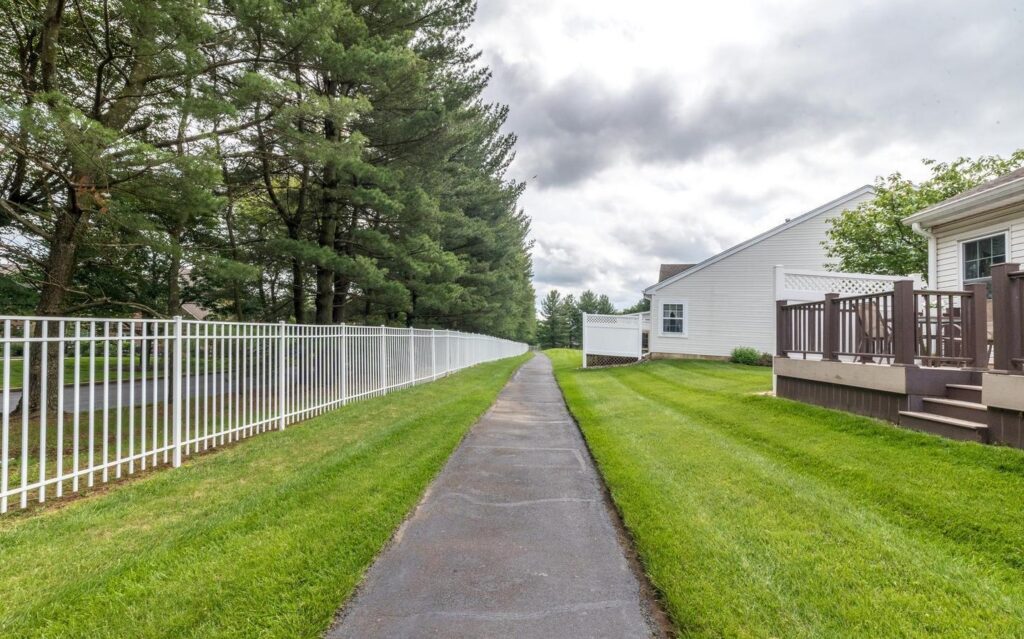
- Finding walking trails, sidewalks, and shared amenities
- Locating the nearest grocery store, pharmacy, and medical offices
- Keeping one familiar weekly routine
Take walks even if you do not yet feel social. Learn where the mailboxes, clubhouse, fitness room, pool, and activity spaces are located.
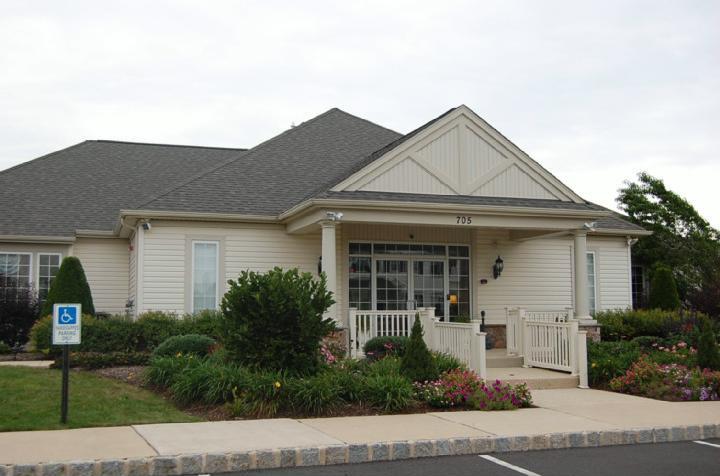
In the Village of Doylestown, walking paths and sidewalks are part of the neighborhood experience, with downtown Doylestown shops, restaurants, cultural attractions, and services nearby. In Warrington, Bluestone Creek offers walking trails, a clubhouse, a fitness center, and a gazebo.
The goal is not to know everyone. The goal is to know where things are.
Days 31–60: Settle into a routine
By the second month, begin testing the lifestyle you thought you were buying.
Join one club or activity. Just one.
It could be:
- A walking group
- Cards
- Book club
- Fitness class
- Water aerobics
- Gardening
- Pickleball
- A volunteer committee
- A community coffee hour
Residents consistently say that joining one activity is the fastest way to feel connected. You do not need to attend every event. Start with something that matches your interests and energy level.
This is also the time to establish your local routines:
- Which grocery store is easiest?
- Where will you get your prescriptions?
- Which doctor’s office is convenient?
- Where do you prefer to walk?
- Which restaurants offer takeout?
- What is the best route to Doylestown, Newtown, or your family?
Fall is a beautiful time to establish these routines in Bucks County. Take advantage of crisp-weather walks, seasonal markets, and community activities. As the holidays approach, look for events in Doylestown and Newtown, but do not overbook yourself.
Days 61–90: Own the lifestyle
The third month is when your new home should begin feeling less like a project and more like home.
Try to:
- Host coffee, dessert, or a casual lunch
- Review the community calendar each week
- Attend an HOA or community meeting
- Use the amenities included with your monthly fee
- Invite a neighbor for a walk
- Continue the activity you enjoyed most
- Decide which activities are worth your time: and which are not
You do not have to become the most social person in the community. You do need to participate enough to find your people.
Mistakes First-Time 55+ Buyers Make
Residents tell us these mistakes come up again and again:
- Not reading the HOA documents before moving. Understand parking, pets, rentals, exterior changes, guests, and maintenance responsibilities.
- Assuming every community is equally social. Some have packed calendars. Others are peaceful and quiet. Match the community to your personality.
- Thinking a smaller home means less to do. You still need to transfer prescriptions, update accounts, change your address, and set up utilities.
- Waiting to introduce yourself. The residents who make friends fastest usually say hello during week one.
- Moving too much “just in case” stuff. Then they pay to store belongings they should have donated.
- Ignoring the community’s location. Think about grocery stores, doctors, family, restaurants, walking routes, and holiday activities: not just the home itself.
- Waiting for a perfect social calendar. The fastest way to feel at home is to show up consistently.
The First 90 Days Set the Tone
Moving into a 55+ community is a lifestyle transition, not just a real estate transaction.
The right home matters. So do the floor plan, HOA responsibilities, maintenance package, location, amenities, and community culture. That is why choosing among the many 55 and over communities in Bucks County PA requires more than looking at listing photos.
You need to know how the community actually lives.
If you are considering senior living in Bucks County: or an active-adult move that gives you less maintenance and more flexibility: we are more than willing to help. We can help you compare communities, understand the practical differences, and prepare for the move before you make an offer.
Contact us for a personal conversation:
- Christina Swain: 267-397-6291 or 215-757-7257
- Email: info@BucksCountyBoomers.com
- Christina directly: Christina@RealtorInRed.com
- Website: BucksCountyBoomers.com
The residents who thrive are the ones who show up: to the walking trail, the clubhouse, the neighborhood gathering, and the first friendly introduction.
Your first 90 days are not about getting everything right. They are about beginning to belong.