A home elevator can make a multi-level house a true forever home. But it is mechanical equipment, not a permanent, maintenance-free fixture.
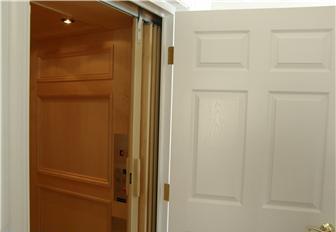
At Woodhaven Hills in Bensalem, every one of the community’s 52 twin townhomes includes a private elevator. The homes were built between 2007 and 2009. That means the elevators are approximately 17 to 19 years old in 2026.
That age matters.
A well-maintained 2008 elevator is a very different ownership proposition from a neglected 2008 elevator. Buyers should treat the system like a roof, HVAC unit, or major appliance: it has a service schedule, an expected lifespan, and a future replacement or modernization horizon.
Why Woodhaven Hills Is Different
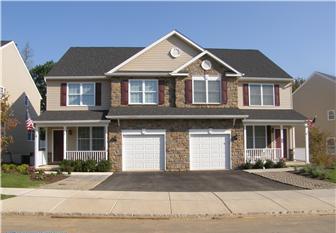
Woodhaven Hills is the only 55+ community in the region where every home was built with a private in-home elevator as a standard feature.
The single cul-de-sac sits just off Woodhaven Road near Route 13 and I-95. The approximately 1,845-square-foot homes typically include:
- Two bedrooms and 2.5 bathrooms
- A first-floor primary suite
- A full basement
- Stone fronts
- Two-car garages
- Three levels of living space
- A private elevator serving the home
The HOA handles lawn maintenance, landscaping, snow removal, driveway and walkway shoveling, and common-area maintenance. That makes the community attractive to buyers searching for 55 plus communities in Bucks County PA, especially those who want a lock-and-leave lifestyle without giving up storage or guest space.
The elevator is also a major part of the value proposition. With only 52 homes and no comparable supply being added, demand is HIGH. We wish we had more Woodhaven Hills homes to show buyers.
Who Services a Residential Elevator?
A general handyman is not the right person for this job.
Home elevators are serviced by:
- Dedicated residential elevator companies
- Local elevator service providers
- The original installer or manufacturer
- Independent contractors familiar with the specific brand and drive system
Common manufacturers in the residential market include Inclinator, Savaria, and Cambridge. The correct service company depends on the elevator’s brand, model, drive type, and parts availability.
That last point becomes more important as equipment ages. A service provider may be able to maintain an older elevator reliably, but specialized electronic components or discontinued parts may take longer to source.
A qualified technician should be able to tell you:
- Whether the system is still supported
- Which parts are becoming difficult to obtain
- Whether a modernization kit is available
- Whether the existing system can continue safely and economically
There is no safe DIY version of elevator maintenance. Do not remove panels, bypass safety switches, adjust cables, or attempt electrical repairs yourself.
Elevator Drive Types: What Buyers Should Know
You do not need to become an elevator engineer. However, you should know what type of system is installed in the home you are buying.
Hydraulic elevators
Hydraulic systems are known for smooth operation and strong lifting capacity. They often use a pump, cylinder, and fluid system. Depending on the design, they may require a machine room or dedicated mechanical space.
Service may include checking:
- Hydraulic fluid levels and leaks
- Pump operation
- Seals and cylinders
- Door interlocks
- Leveling accuracy
- Emergency lowering functions
Winding-drum or cable-driven systems
These systems use cables, drums, gears, and motors. They can be compact and are common in some residential installations.
Technicians typically inspect:
- Cable condition and tension
- Drum and gear wear
- Motor and brake operation
- Guide rails
- Door equipment
- Safety switches
Machine-roomless and chain-drive systems
MRL and chain-drive systems use different equipment configurations and have their own maintenance requirements. Parts availability and technician familiarity are especially important for older or less common models.
The specific drive type in a Woodhaven Hills home should be confirmed during due diligence. A standard home inspection will not provide the detailed elevator assessment you need.
How Often Should a Home Elevator Be Serviced?
Annual professional service should be the minimum.
Many manufacturers and service providers recommend maintenance every six to twelve months. For a heavily used, older, or accessibility-critical elevator, twice-yearly service is a reasonable standard, not an unnecessary luxury.
A service visit may include:
- Testing door locks and interlocks
- Checking emergency alarms and phones
- Inspecting cables, chains, belts, or hydraulic components
- Lubricating moving parts
- Checking brakes and safety devices
- Testing battery backup or emergency lowering
- Checking leveling at every landing
- Reviewing fault codes and controller performance
- Inspecting the pit or machine area for water, rust, and debris
- Recording work completed and recommended repairs
Keeping a written maintenance log is important. The log helps you plan for modernization, supports insurance discussions, and gives a future buyer confidence.
What Does Elevator Maintenance Cost?
For a private residential elevator in 2026, a practical planning range is approximately $300 to $800 per year for routine professional maintenance.
Some current market estimates are lower or higher depending on the company, location, equipment, and contract terms. More comprehensive plans may exceed $800 annually if they include parts, priority response, or additional service visits.
Typical plan differences include:
- Basic plan: Scheduled inspection, lubrication, adjustments, and safety checks. Parts and repair labor may be extra.
- Standard plan: Preventive maintenance plus limited troubleshooting or reduced service-call charges.
- Comprehensive plan: Additional visits, priority response, selected repair labor, or parts allowances.
Ask exactly what the contract includes. “Maintenance included” does not necessarily mean that every repair or replacement part is covered.
A per-visit repair can cost significantly more than routine service. Staying on a plan helps identify problems early and may reduce emergency-call costs.
Cost disclaimer: These are current market ranges, not quotes for a specific Woodhaven Hills home. Get written pricing from a qualified elevator service company after the brand, model, drive type, and condition are confirmed.
The 17-to-19-Year Question: Modernization Is Now Part of the Conversation
The most important issue for Woodhaven Hills buyers in 2026 is age.
Residential elevator controllers and electronic components commonly enter a modernization or replacement discussion around years 15 to 20. The overall system may continue operating safely, but older electronics can become difficult to support.
Potential warning signs include:
- Repeated shutdowns or fault codes
- Unreliable leveling
- Doors that hesitate or fail to close properly
- Difficulty finding replacement boards or relays
- Increasing repair frequency
- A service company recommending obsolete equipment upgrades
Residential elevator life expectancy is often estimated at roughly 20 to 25 years, although maintenance, usage, design, environment, and component quality make a major difference.
This does not mean buyers should avoid Woodhaven Hills. It means they should buy INFORMED.
A maintained elevator with documented modernization may be substantially more valuable than an elevator that still works but has no service history. Budget for the possibility of controller work or larger modernization in the same way you would budget for a future roof.
What Pennsylvania Requires
Pennsylvania’s Uniform Construction Code, including 34 Pa. Code Chapter 405, contains inspection and operating requirements for covered elevators and lifting devices.
However, elevators located solely within a private residence and used only by the occupants of one dwelling unit are generally excluded from those UCC requirements under 34 Pa. Code § 405.1(b)(3).
That usually means a private in-home elevator serving one Woodhaven Hills twin is not subject to the same state periodic inspection and certificate-of-operation requirements that apply to commercial or multi-unit equipment.
There are important caveats:
- Confirm the exemption for the specific property and configuration.
- If equipment is shared or accessible by more than one dwelling unit, different rules may apply.
- A state exemption does not eliminate manufacturer maintenance standards.
- Your homeowner’s insurance company may expect documented service.
- Local requirements or private contractual obligations may still apply.
Review the Pennsylvania regulation, confirm requirements with the municipality or a qualified elevator professional, and ask your insurance carrier what records it expects.
The Buyer’s Elevator Checklist
Before you buy, ask these questions:
- What brand and model is the elevator?
- What drive type does it use?
- When was it installed?
- Has the controller or any major component been modernized?
- Are the original installation permit and owner documents available?
- Is there a complete service history?
- Who has performed the maintenance?
- Is there an active service contract, and can it transfer to you?
- When was the last service visit, and what did the technician find?
- Are parts readily available for this brand and model?
- What repairs or replacements have been completed?
- Is the elevator operational, and can you ride it during the showing?
Most importantly, hire an independent elevator professional before closing.
A regular home inspector may identify the elevator but will not typically evaluate its controller, drive system, safety equipment, parts availability, or modernization needs in sufficient detail.
If You Are Selling a Woodhaven Hills Home
Your elevator records are an asset.
Before listing:
- Gather service contracts and invoices.
- Locate the original installation information.
- Schedule service if the elevator is overdue.
- Address deferred repairs.
- Ask the technician whether modernization should be planned.
- Keep written documentation of completed work.
A working elevator with a clear maintenance history creates confidence. A non-functioning elevator in Woodhaven Hills removes one of the features buyers are specifically seeking.

The Honest Bottom Line
A home elevator is not maintenance-free. It is a specialized mechanical system that needs professional attention.
But $300 to $800 per year for routine service may be a small price for the ability to use all three levels of your home for decades. The elevator can help you carry laundry, move holiday decorations, accommodate a temporary injury, and remain in a home that works for changing mobility needs.
At the same time, a 17-to-19-year-old system may be entering its first significant modernization window. That is a real financial consideration. Do not ignore it. Investigate it, price it, and negotiate with clear information.
That is especially important in Woodhaven Hills because every home has an elevator. In this community, elevator condition directly affects the home’s value.
The Swain Team knows the Woodhaven Hills market and can help you identify homes with documented elevator service. We can help request available records, coordinate your due diligence, and connect you with an independent elevator professional before you commit.
If you are exploring senior living in Bucks County, retirement communities in Bucks County PA, or other 55 and over communities in Bucks County PA, we are more than willing to help you compare your options.
Ask us to add you to our First Look list for Woodhaven Hills . With only 52 homes and limited turnover, a waiting list is common.
Contact Christina Swain today:
- Phone: 215-757-7257
- Email: TheSwainTeam@gmail.com
- Contact page: BucksCountyBoomers.com/contact
We are local real estate professionals, not affiliated with the Woodhaven Hills HOA, and we are ready to help you buy carefully, sell confidently, and plan for the future.